25 Things To Do In Oxford
Oxford has always felt a little magical to me. I’ve been coming here for years to visit family studying at the university, which means I’ve seen it both as a quick day trip from London and as a slower weekend escape.
Every time, the mix of spires, cobbled lanes, and riverside walks makes me fall for it all over again. It’s a city where history feels alive, but it’s also full of cosy pubs, lively markets, and green spaces perfect for a breather.
Whether it’s your first visit or your fifth, Oxford has a way of showing you something new each time.
1. Bodleian Library
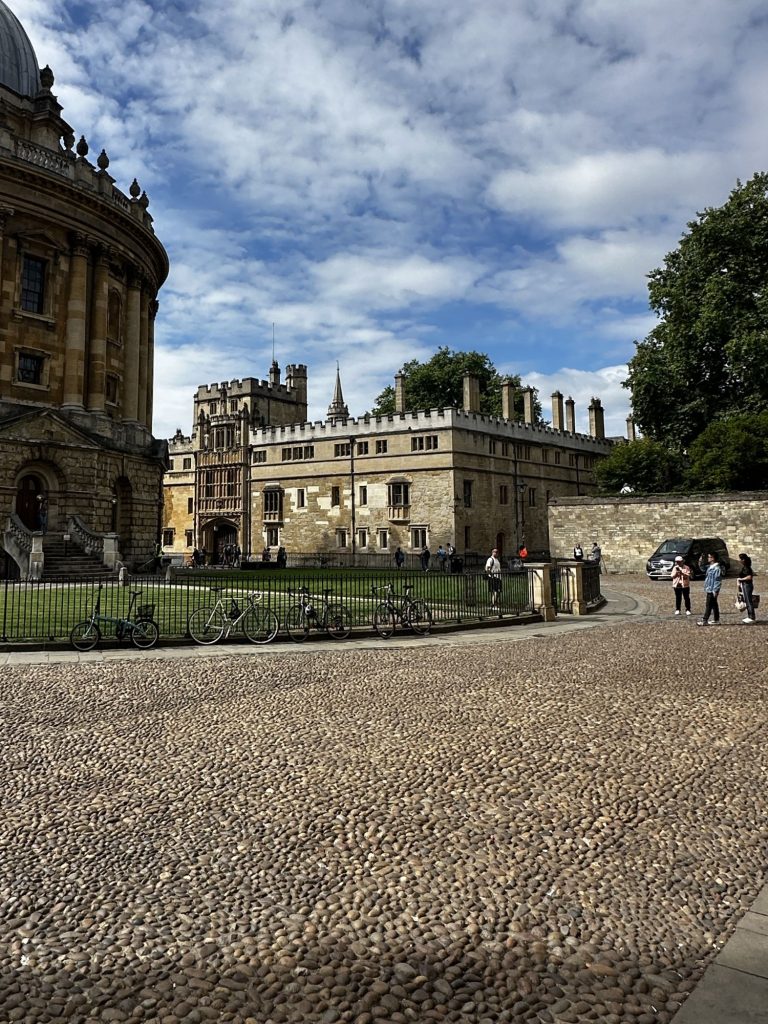
The Bodleian Library is one of the oldest libraries in Europe and a large part of Oxford’s academic life. First opened in 1602, it now houses over 13 million printed items, making it one of the largest libraries in the world. Known affectionately as “the Bod,” it has welcomed scholars for centuries, including kings, prime ministers, and writers such as J.R.R. Tolkien and Oscar Wilde.
The architecture alone is worth the visit. The Divinity School, with its ornate fan-vaulted ceiling, is a masterpiece of medieval design. Duke Humfrey’s Library feels like something straight out of a film set, and in fact, it appeared in the Harry Potter movies. Even if you are not a student, you can join a guided tour to step inside and glimpse this world of books and tradition.
When I first walked through the quadrangles, I was struck by how alive the place felt despite its age. Students hurried between lectures while visitors admired the intricate carvings on the stone buildings. It is a reminder that this is not just a monument but a working library at the heart of Oxford.
Tip: Guided tours often sell out quickly, so book in advance if you would like to see inside the historic reading rooms. If you are short on time, at least visit the Divinity School. It is small, inexpensive, and absolutely stunning.
2. Radcliffe Camera

The Radcliffe Camera is one of Oxford’s most recognisable landmarks. Built between 1737 and 1749, it was designed by James Gibbs to house the Radcliffe Science Library. Today it is part of the Bodleian and used as a reading room for students, but its circular shape and elegant dome have made it one of the city’s most photographed buildings.
Although visitors cannot usually go inside, the Radcliffe Camera is best enjoyed from the outside. Its honey-coloured stone glows beautifully in the sunlight, and its position in Radcliffe Square makes it the centrepiece of one of Oxford’s most picturesque corners. Surrounded by cobbled lanes, spires, and college buildings, it feels like the Oxford of postcards.
I remember walking through Radcliffe Square early in the morning when the streets were still quiet. The dome rose up above me, perfectly framed by the towers around it, and for a moment it felt like stepping back in time. Later in the day the square fills with students, tour groups, and photographers, all drawn to this striking building.
Tip: For the best views, climb the tower of the University Church of St Mary the Virgin opposite. From there you will see the full curve of the dome and the surrounding skyline of spires.
3. University Church of St Mary the Virgin
At the heart of Oxford, the University Church of St Mary the Virgin is both a place of worship and a gateway to some of the best views in the city. The church dates back to the 13th century and has played an important role in the history of the University of Oxford. It was here that the university first held its governing meetings, and the church later became a centre of religious debate during the Reformation.
The building itself is beautiful, with tall stained glass windows, intricate carvings, and a peaceful interior. The real highlight for many visitors, though, is the climb up the narrow spiral staircase to the top of the tower. From there, you can look out over the Radcliffe Camera, the Bodleian Library, and the city’s famous skyline of dreaming spires.
Tip: The staircase is quite narrow, so be prepared for a squeeze when passing others. Early morning or late afternoon visits are usually quieter and give you the chance to enjoy the views without the crowds.
4. See the Bridge of Sighs
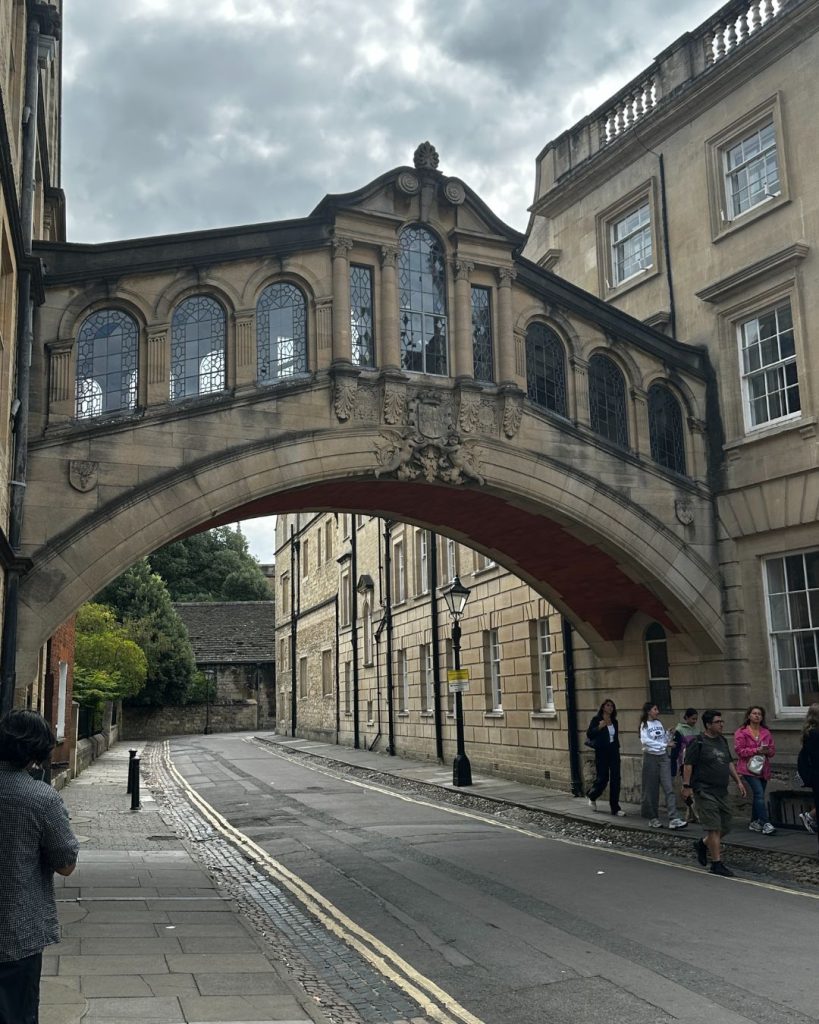
Officially called Hertford Bridge, this covered walkway connects two parts of Hertford College and has become one of Oxford’s most photographed landmarks. It is nicknamed the Bridge of Sighs because of its resemblance to the famous Venetian bridge, although Oxford’s version was built much later in 1914. The original in Venice dates back to the early 1600s and linked the Doge’s Palace to the prisons, giving prisoners one last view of the city as they sighed before being led away.
I snapped my photo on a very grey-skied day, which feels like a rite of passage for anyone sightseeing in England. I promise to update it on my next visit when Oxford blesses me with blue skies, until then, imagine the spires glowing in the sunshine.
Tip: The best photos are taken from Catte Street, especially in the morning when it is quieter.
5. Christ Church College
Christ Church is one of Oxford’s most famous colleges. Founded in 1546 by King Henry VIII, it has produced thirteen British prime ministers and countless notable alumni. The college is not only home to students but also to Christ Church Cathedral, making it the only Oxford college with its own cathedral.
Walking through Christ Church feels like stepping onto a film set. The grand dining hall inspired the Great Hall in the Harry Potter films, while the sweeping staircase was used in several scenes. Beyond the film connections, the architecture itself is magnificent, from the Tom Tower designed by Sir Christopher Wren to the elegant cloisters and quadrangles.
I wandered through the meadows on a sunny afternoon, watching the River Thames (known locally as the Isis) curve around the college grounds. It was hard to believe I was still in the centre of the city. The sense of history here is powerful, yet it remains a living, working college filled with students and staff.
You can even stay overnight at Christ Church through University Rooms and have breakfast in the Great Hall, which inspired the Harry Potter dining hall. It is a brilliant way to experience the college without being a student.
Tip: Entry tickets are timed and can sell out quickly, especially in summer. Book ahead online to secure your spot, and give yourself enough time to explore both the cathedral and the meadows outside.
6. Magdalen College
Magdalen College, founded in 1458, is one of Oxford’s most picturesque colleges. Its tall, elegant tower is one of the city’s defining landmarks, rising above the High Street and often framed in photographs of Oxford’s skyline. The college has educated poets, politicians, and Nobel Prize winners, but for most visitors, it is the beautiful grounds that steal the show.
Inside the college walls, you will find quiet cloisters, peaceful courtyards, and a stunning chapel filled with stained glass. The highlight, however, is the deer park, a wide meadow where a herd of deer has roamed for centuries. Walking along the riverside paths, with deer grazing nearby, feels like a scene from another age.
Tip: Visit in spring or early summer to see the gardens at their best, with wildflowers in bloom. The May Morning celebrations, where the choir sings from the top of Magdalen Tower at sunrise, are a unique Oxford tradition worth experiencing if you happen to be in the city on 1 May.
7. New College
Despite its name, New College is one of the oldest in Oxford. Founded in 1379 by William of Wykeham, it set the model for many of the university’s later colleges. Its architecture and gardens make it one of the most beautiful places to visit in the city, with hidden corners that seem to belong to another world.
The cloisters are a particular highlight, their stone arches framing views of the quadrangles beyond. Fans of Harry Potter may recognise them from scenes filmed here, but even without the film connection they are atmospheric and full of history. The college chapel, with its soaring ceiling and impressive organ, is another highlight, and the gardens stretch along part of the old city wall, giving them a unique setting.
Tip: New College is usually less crowded than Christ Church or Magdalen, which makes it a good choice if you want to explore at a more relaxed pace. Entry is ticketed, so check opening times before you go.
8. Carfax Tower
Carfax Tower stands at the very centre of Oxford, marking the point where the city’s four main streets meet. It is all that remains of the 12th-century St Martin’s Church, which was once the official city church before it was demolished in the 1800s. At 74 feet tall, the tower is not the highest viewpoint in Oxford, but it offers a central vantage point that gives a real sense of the city’s layout.
Climbing the narrow staircase to the top is a short but slightly steep effort, and once you reach the viewing platform you are rewarded with sweeping views over the rooftops. From here you can spot the Radcliffe Camera, the spires of the University Church, and the bustle of Cornmarket Street below.
Tip: The viewing platform is small, so it can feel crowded at busy times. Try going early in the day or later in the afternoon for a quieter experience.
9. Ashmolean Museum

The Ashmolean Museum is one of Oxford’s greatest treasures and a must-visit for anyone interested in art, archaeology, or history. Founded in 1683, it is the world’s first university museum and has been welcoming curious visitors for centuries. Its collection is vast, ranging from Egyptian mummies and Greek statues to Renaissance paintings and modern art.
One of the highlights is the Anglo-Saxon Alfred Jewel, a beautifully crafted object that dates back to the 9th century. The museum also houses works by famous artists such as Turner, Picasso, and Michelangelo. Each floor feels like a journey through time, with carefully curated exhibits that make it easy to lose track of the hours.
The building itself is elegant, with wide staircases and light-filled halls that make exploring a pleasure.
Tip: Entry is free, making it one of the best-value attractions in Oxford. If you are short on time, pick up a map and head straight to the highlights, but if you can spare half a day, it is worth exploring slowly.
10. Pitt Rivers Museum
The Pitt Rivers Museum is one of Oxford’s most unusual and fascinating museums. Opened in 1884 to display the collection of General Pitt Rivers, it houses over half a million objects from all around the world. What makes it so distinctive is the way the exhibits are presented. Instead of being arranged by geography, the displays are grouped by type, so you will find tools, weapons, masks, and jewellery from different cultures placed side by side.
Visitors often talk about the eerie shrunken heads, but there are countless other fascinating objects to discover, from intricate textiles to ancient musical instruments. The atmosphere is dark and atmospheric, with tall display cases packed full of surprises.
I remember spending far longer here than I expected. Each case seemed to reveal something unexpected, and the sheer variety was overwhelming in the best possible way. It felt like a place where you could visit a dozen times and still discover something new.
Tip: The museum is free to enter and is located right behind the Natural History Museum, making it easy to combine the two in a single visit. Be prepared to spend at least an hour exploring, as there is much more to see than first meets the eye.
11. Oxford University Museum of Natural History
The Oxford University Museum of Natural History is one of the city’s most striking buildings. Opened in 1860, it was designed in a neo-Gothic style with soaring arches and a vast glass roof that fills the central hall with light. The architecture alone makes it worth a visit, but the collections inside are just as impressive.
The museum is home to an extraordinary range of specimens, from towering dinosaur skeletons to delicate butterflies pinned in glass cases. Perhaps the most famous exhibit is the remains of the Oxford dodo, one of the few surviving examples of the extinct bird. The displays are both educational and accessible, making the museum popular with families as well as students and researchers.
Tip: Entry is free, and the museum is directly connected to the Pitt Rivers Museum, so it makes sense to visit both together. The central court is particularly beautiful in the afternoon when the sunlight streams through the glass roof.
12. Museum of the History of Science
Housed in the Old Ashmolean Building, which dates back to 1683, it is the oldest purpose-built museum building in the world. Inside, you will find a fascinating collection of scientific instruments that tell the story of discovery and invention over the centuries.
The displays include astrolabes, early microscopes, globes, and medical instruments, all beautifully presented in oak cases. One of the highlights is a blackboard used by Albert Einstein during a lecture at Oxford in 1931, with his chalk writing still preserved. The museum also holds mathematical instruments, early cameras, and items connected to famous scientists such as Galileo.
The setting itself, with its creaking wooden floors and historic rooms, adds to the sense of stepping back in time.
Tip: The museum is free to enter, and because it is smaller than some of Oxford’s other attractions, it makes a great short stop between visiting the Bodleian and the Sheldonian Theatre nearby.
13. Sheldonian Theatre
Designed by Sir Christopher Wren and completed in 1669, the Sheldonian Theatre was his first major commission and still hosts university ceremonies, concerts, and lectures today. From the outside, its curved façade and tall windows make it one of the most elegant buildings in the city.
Inside, the theatre is just as impressive. The painted ceiling, created by Robert Streater, depicts Truth descending on the arts and sciences, and is a remarkable piece of 17th-century artwork. The tiered seating gives the hall a grand, almost theatrical feel, even though it has never been used for plays.
Climbing to the top rewards you with some of the best views in Oxford. The Cupola offers a panoramic sweep across the Radcliffe Camera, the Bodleian, and the city’s skyline of spires. Standing there, it is easy to see why Oxford has long been called the city of dreaming spires.
Tip: Entry is inexpensive and usually less crowded than the nearby Bodleian. Try to time your visit when the viewing gallery is open, as the panorama is one of Oxford’s finest.
14. Oxford Castle & Prison
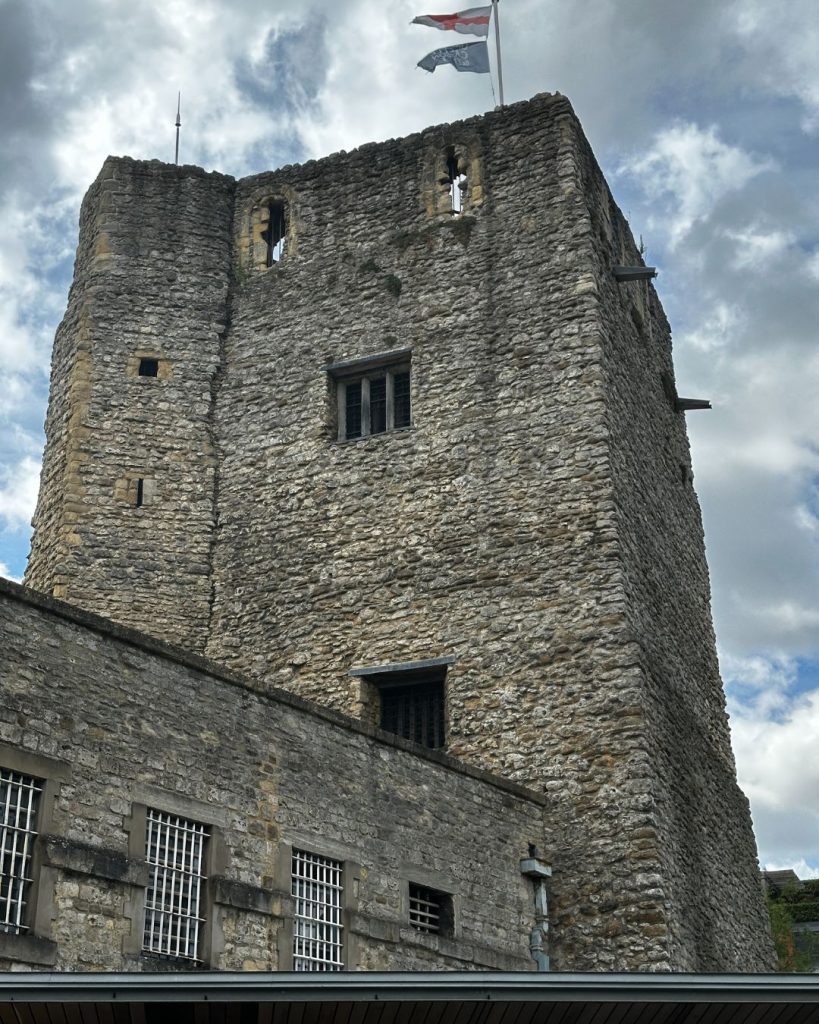
Oxford Castle & Prison is a fascinating site that tells stories spanning almost a thousand years. Built by the Normans in the 11th century, it served as a castle, courthouse, and later as a working prison right up until 1996. Today, visitors can explore its history on guided tours that bring the past vividly to life.
Highlights include St George’s Tower, one of the oldest surviving parts of the castle. Climbing to the top gives a wonderful view over Oxford. Below ground, the atmospheric crypt of St George’s Chapel is thought to be the oldest building in the city. You can also step inside preserved prison cells, where guides share stories about the people who were once held here.
On my last visit, I found the mix of medieval and modern history especially striking. Standing in a centuries-old tower one moment and in a Victorian prison block the next showed just how many layers of history this site contains. The storytelling from the guides added real colour and character to the experience.
Tip: Tours are popular, particularly on weekends, so it is a good idea to book ahead. If you are short on time, you can still wander the castle courtyard for free and get a sense of the site’s history from the outside.
15. Oxford Covered Market

The Oxford Covered Market has been at the heart of city life since the 18th century. Opened in 1774, it was originally designed to bring all of Oxford’s butchers and food sellers under one roof. Today, it is a lively mix of independent shops, cafés, and stalls that make it a favourite stop for both locals and visitors.

Inside, you will find everything from traditional butchers and bakers to florists, gift shops, and clothing boutiques. It is also a great place to grab something to eat, whether you fancy a quick sandwich, fresh produce, or a sit-down meal at one of the cafés. The colourful displays of fruit, flowers, and sweets make it a particularly photogenic spot.
I have eaten at many of the cafés and food spots here over the years, and one of my favourites is Sasi Thai that serves fresh, flavourful dishes at great prices.
Tip: The market is busiest at lunchtime, so go in the morning if you want to browse in peace. It is also mostly covered, which makes it an excellent place to visit if the weather turns typically British.
16. Gloucester Green Market
Gloucester Green Market is a colourful open-air market that brings together food, fashion, and local finds. Set in a square just behind George Street, it has been running for decades and has become a favourite with both locals and visitors.
The highlight is the food stalls, which offer an impressive mix of international cuisines. You can find everything from Thai noodles and Turkish gözleme to Venezuelan arepas and freshly baked cakes. Alongside the food, the market also hosts traders selling antiques, second-hand books, clothes, and handmade crafts, depending on the day of the week.
I wandered through on a Friday lunchtime and was amazed at how many options there were. The smell of spices and sizzling food filled the air, and the square was buzzing with people grabbing a quick bite or browsing the stalls. It felt like the kind of place you could return to again and again and always try something different.
Tip: The market runs on Wednesdays, Thursdays, Fridays, and Saturdays, with food stalls most vibrant at lunchtime. Go hungry, and bring cash as not every stall takes cards.
17. Blackwell’s Bookshop
Blackwell’s Bookshop is a paradise for book lovers and one of Oxford’s most beloved institutions. The original shop opened in 1879, and it has since grown into a landmark that attracts readers from all over the world. Its most famous feature is the Norrington Room, an enormous underground chamber filled with over three miles of shelving.
The shop covers every subject imaginable, from academic texts to travel guides, and there is always a quiet corner where you can pause and browse. For many visitors, stepping into Blackwell’s is as much a part of the Oxford experience as visiting the Bodleian or Radcliffe Camera.
I still remember the first time I walked into the Norrington Room. The scale of it was overwhelming, with row upon row of books disappearing into the distance. It felt like a library you could happily get lost in for hours. The atmosphere is warm and welcoming, making it just as appealing for casual visitors as for serious scholars.
Tip: Look out for author events and signings, which are regularly held here. Even if you are not planning to buy, the Norrington Room alone is worth a visit for its sheer size and charm.
18. Go Punting on the River Cherwell
Punting is a classic Oxford experience and a relaxing way to see the city from the water. A punt is a flat-bottomed boat that you push along with a pole, and gliding past the university gardens and meadows is a highlight on a sunny day.
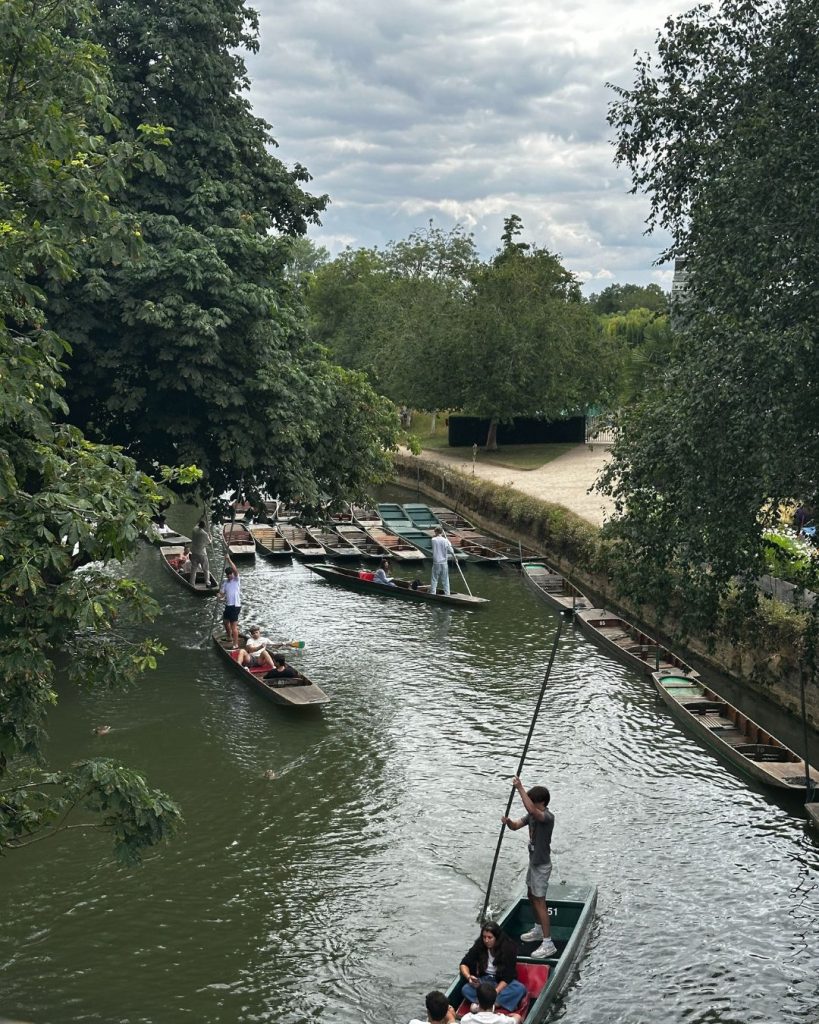
You can hire a punt yourself if you feel confident having a go, or book a chauffeured punt and let an expert do the hard work while you sit back and enjoy the views. Popular departure points include Magdalen Bridge and Cherwell Boathouse.
I once tried punting myself and quickly discovered it was harder than it looks. After a few clumsy zig-zags, I happily let someone else take over. If you are new to it, a chauffeured option makes the whole experience far more relaxing.
Tip: Punting is best in spring and summer, when the trees are green and the river feels especially peaceful.
19. Oxford Botanic Garden
Founded in 1621, the Oxford Botanic Garden is the oldest in the United Kingdom and one of the oldest scientific gardens in the world. Originally created to grow medicinal plants for university studies, it now houses thousands of species from across the globe. Walking through its walled garden and glasshouses is a journey through centuries of botanical discovery.
The riverside location makes it a peaceful retreat from the busy city centre. In spring and summer, the flowerbeds burst with colour, while the glasshouses showcase everything from exotic orchids to desert succulents.
20. Port Meadow
Port Meadow is one of Oxford’s most atmospheric open spaces, stretching along the River Thames just a short walk from the city centre. This ancient common land has never been ploughed, and its history goes back to at least the Domesday Book of 1086. To this day, it remains a place where cattle and horses graze freely, giving it a timeless feel.
The meadow is perfect for a leisurely walk, especially on a sunny day. The wide open skies and riverside views make it feel far removed from the bustle of the city, even though you are only minutes away. At dawn and dusk, the light across the water can be breathtaking, and it is easy to see why writers and artists have been inspired by this landscape.
Tip: Wear sturdy shoes if the weather has been wet, as the ground can get muddy. For a longer walk, follow the Thames Path across the meadow and continue on towards Wolvercote, where you will find some traditional pubs.
21. Jericho Neighbourhood
Just north of the city centre, Jericho is one of Oxford’s most characterful areas. Once an industrial district, it has evolved into a lively neighbourhood filled with independent shops, cosy pubs, and restaurants serving cuisines from around the world. Its mix of Victorian terraces, canalside walks, and a vibrant cultural scene makes it a great place to explore beyond the university sights.
Jericho is also home to the Phoenix Picturehouse, a much-loved independent cinema that first opened in 1913. The area has long been associated with artists and writers, and it retains a creative, bohemian feel. Whether you are after a quiet pint in a traditional pub or a stylish dinner, Jericho has plenty of options.
I enjoyed wandering through Jericho on a warm evening, when the streets were buzzing with people heading out for food and drinks. Compared to the historic centre, it felt more relaxed and local, with a sense of everyday Oxford life that you do not always see in the tourist hotspots.
Tip: Combine a stroll through Jericho with a walk along the Oxford Canal, which runs right past the neighbourhood. It is especially lovely in summer when the water is lined with narrowboats and flowers spilling from gardens.
22. Take a Boat Trip on the Thames or Cherwell
If punting feels a little too tricky, a river cruise is a more relaxed way to enjoy Oxford’s waterways. Boats usually depart from Folly Bridge and glide along the Thames, past meadows, college boathouses, and peaceful countryside just beyond the city.
You can choose from short sightseeing trips or longer evening cruises that include drinks or dinner on board. Watching the sun set over the river is a lovely way to round off a day in Oxford.
Tip: Cruises are seasonal and very popular in summer, so book in advance if you are visiting during peak months.
23. University Parks
University Parks is one of Oxford’s most popular green spaces. Spread over 70 acres along the River Cherwell, the parks are a mix of open lawns, tree-lined paths, and ornamental gardens. Originally created in the 19th century for university use, they are now open to the public and a favourite spot for students, families, and visitors.
The parks are perfect for a gentle stroll, a riverside walk, or even a game of cricket on summer afternoons. There are hidden highlights too, including the Japanese pagoda tree, a collection of rare plants, and a curious dinosaur footprint embedded in one of the paths.
Tip: If you want a quieter experience, head towards the river end of the park. The paths there are shaded and scenic, making them especially pleasant in warm weather.
24. Blenheim Palace (Day Trip from Oxford)
Just a short journey from Oxford, Blenheim Palace is one of England’s grandest country houses and a UNESCO World Heritage Site. Built in the early 18th century as a gift to John Churchill, the 1st Duke of Marlborough, it remains the ancestral home of the Churchill family. It is also the birthplace of Sir Winston Churchill, whose legacy is celebrated in an exhibition inside the palace.
The palace itself is breathtaking, with gilded state rooms, ornate ceilings, and a remarkable collection of art and furniture. Outside, the landscaped gardens designed by Capability Brown are just as impressive, with sweeping lawns, lakes, and a series of themed gardens to explore.
I visited on a sunny summer’s day and found myself lingering in the rose garden before wandering down to the Great Lake, where the palace reflected beautifully in the water. The scale of the estate makes it easy to spend a full day here, with plenty of trails and hidden corners to discover.
Tip: Blenheim Palace is around twenty minutes from Oxford by bus, train, or car. Tickets can be on the expensive side, but if you upgrade to an annual pass at no extra cost, you can return as often as you like within a year.
25. Take a Walking Tour
A walking tour is one of the best ways to really get to know Oxford. The city is full of stories, and having a guide bring them to life makes the experience even richer.
- Harry Potter Tours: Oxford has plenty of filming locations, including the cloisters of New College and the Divinity School in the Bodleian Library. These tours are always popular, especially with families.
- Literary Tours: Follow in the footsteps of famous writers linked to Oxford, from J.R.R. Tolkien and C.S. Lewis to Lewis Carroll, who wrote Alice’s Adventures in Wonderland.
- Inspector Morse and Endeavour Tours: Fans of the TV series will love seeing the real-life settings that inspired the stories.
- Classic Walking Tours: If you prefer a general overview, there are plenty of guided walks that cover Oxford’s history, architecture, and university traditions.
I have often chosen to wander on my own with a self-guided route, which is a lovely way to explore at your own pace. Guided tours, however, are perfect if you want more structure and the chance to learn the fascinating history of Oxford from an expert. You might even find free walking tours running at certain times, which can be a great introduction to the city.
Tip: If you are short on time, choose a tour that combines college entry with a themed walk. It gives you the best of both worlds.
Practical Tips for Visiting Oxford
Getting There
Oxford is well connected to London and other UK cities.
- By train: Fast services run from London Paddington and London Marylebone, taking around an hour.
- By bus: The Oxford Tube and X90 coaches connect Oxford with London Victoria, with a journey time of 90 minutes to 2 hours depending on traffic.
- By car: Driving from London takes around 90 minutes, but parking in Oxford is limited. Park & Ride services are often the easiest option.
Getting Around
Oxford is a compact city, and most of the main sights are within walking distance of each other. Buses are useful for reaching the outskirts, while bikes are a popular choice if you want to experience the city like a student.
Eating in Oxford
Oxford has no shortage of places to eat and drink, from centuries-old pubs to modern cafés. If you want to soak up the city’s history, head to one of the legendary pubs:
- The Eagle and Child: Once a meeting place for J.R.R. Tolkien and C.S. Lewis, this cosy pub is full of literary history (note, at the time of writing The Eagle and Child is temporarily closed while it is being renovated).
- The Turf Tavern: Tucked away down a narrow alley, it is one of Oxford’s quirkiest spots for a pint.
- The Bear Inn: Known for its collection of ties on the walls, this is Oxford’s oldest pub and always full of character.
For something lighter, afternoon tea at one of the city’s cafés is a treat, especially if you need a mid-sightseeing pick-me-up. You will also find an international food scene in Oxford with a variety of restaurants covering many cuisines from around the world. There are some fantastic international restaurants in the Cowley area of Oxford, just outside the city centre.
Whenever I visit, I try to mix it up, one day a traditional pub meal, the next a plate of noodles or curry from one of the smaller local spots. It is a great way to get a taste of Oxford’s mix of old and new.
Tip: Pubs get busy in the evenings, especially on weekends, so if you want a table, try arriving early.
Best Time to Visit
Oxford is beautiful year-round. Spring and summer bring punting, picnics, and gardens in full bloom. Autumn is quieter and very atmospheric with golden leaves around the colleges. Winter is chilly but cosy, with Christmas lights and fewer crowds.
Tickets and Tours
Many attractions require timed tickets, especially popular spots like Christ Church and the Bodleian Library. Booking ahead online is the safest option, particularly in peak season.
Suggested Itinerary Ideas
One Day in Oxford
If you are visiting Oxford on a day trip from London, focus on the highlights that give you the best sense of the city:
- Morning: Visit the Bodleian Library and see the Radcliffe Camera, then climb the tower at St Mary’s Church for the famous view.
- Lunch: Grab food at the Covered Market or Gloucester Green.
- Afternoon: Explore one or two colleges, such as Christ Church or Magdalen College, then take a stroll through Christ Church Meadow.
- Evening: Enjoy a pint at the Turf Tavern or The Eagle and Child before heading home.
A Weekend in Oxford
With two days, you can move at a slower pace and fit in more variety:
- Day One: Start with a walking tour to get your bearings. Visit Christ Church and the Ashmolean Museum, then spend the afternoon punting on the Cherwell or enjoying University Parks. Finish the day with dinner in a traditional pub.
- Day Two: Head to Oxford Castle & Prison in the morning, then enjoy a leisurely boat trip on the Thames. In the afternoon, explore another college such as New College or Balliol, and wrap up your visit with tea or dinner overlooking the river.
Longer Stays
If you have three or more days, add in a day trip. Blenheim Palace and Woodstock are easy and spectacular, while the Cotswolds or Stratford-upon-Avon give you a taste of the English countryside and literary history.